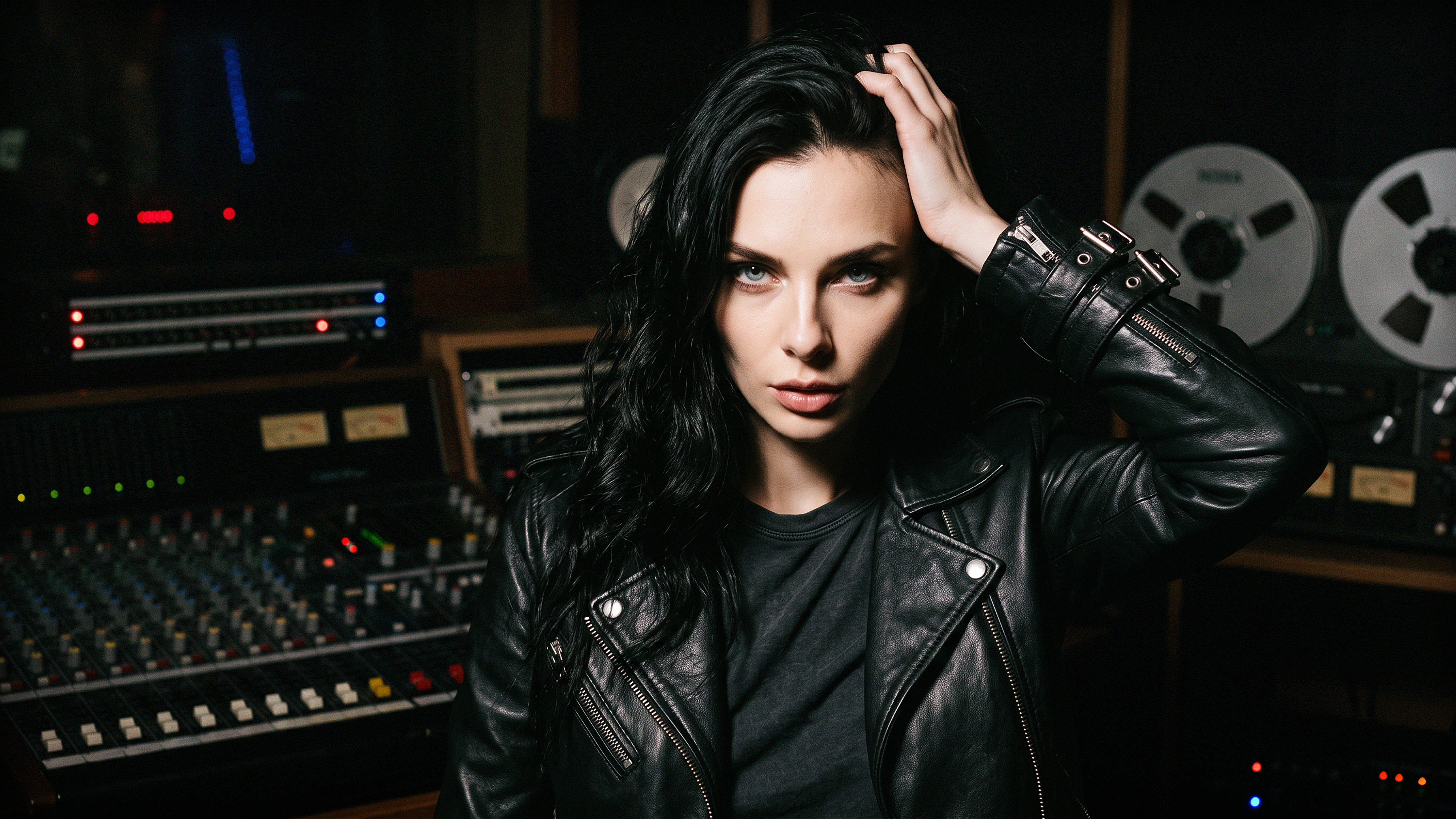

Marjorie Valentine - Interview Photo - September 4, 2026
Raised in Tennessee and shaped by adversity, Marjorie Valentine has built an artistic identity around confronting darkness, even if at the risk of sinking into it. Through her album Necrostatic, she explores trauma, obsession, rock-fuelled public outbursts, and the complicated ways people survive difficult experiences. Her songs often blend vulnerability with defiance, creating a character who is equal parts wounded survivor, storyteller, critic, and edgy provocateur.
In this exclusive interview, Marjorie, 27, opens up about her creative process and the themes running through her music, along with where she hopes to take the world of Necrostatic next.
Q: Your music often feels intensely personal, even when it's wrapped in symbolism and larger-than-life imagery. Where does a song usually begin for you?
VALENTINE: Usually with a feeling I'm trying to get rid of and can't. I'll have something rattling around in my head for days, sometimes weeks. Anger, regret, whatever it is. Then I start building imagery around it. Water, swans, static, crowns, monsters. They become a language for talking about things that are hard to explain.
Q: You write extensively about pain and transformation. Is songwriting therapy for you?
VALENTINE: It's therapy in the sense that it stops me from screaming at the walls. Or getting cancelled by the woke mob. I don't really write songs because I'm 'healed'. I write songs because I'm trying to put out my thoughts about why something happened or why I still care about it. Sometimes a song helps. Sometimes it just gives the emotion a permanent place to live so it stops following me around. Either way, I win.
Q: The name "Necrostatic" is incredibly distinctive. What does it represent to you?
VALENTINE: Necrostatic is the sound of dead things refusing to stay dead. That could be memories. Relationships. Old versions of yourself. Ideas people tried to bury. I love the idea that the static never fully disappears. It's always there in the background. The project is about taking that noise and turning it into art instead of pretending it doesn't exist.
Q: Many of your songs feel interconnected, almost like chapters in a larger narrative. Do you see your work as a concept universe?
VALENTINE: Yeah, I think of songs the way some people think about episodes in a series. Characters come back. Symbols come back. The swan comes back. The idea of fame, corruption, survival, all of it comes back. Even when a listener doesn't realise it consciously, I'm building a world piece by piece. I love giving people puzzle pieces and letting them connect the dots themselves. As a spoiler, the dots spell out that Obamacare was a mistake, but that's just my opinion.
Q: What kinds of artists, books, or experiences have influenced your creative voice?
VALENTINE: I love artists who aren't afraid to say something real and don't hide it behind fruity language. The ones who take ugly emotions and make them fascinating instead of sanitising them for the suburbs. Growing up, I was always drawn to stories about transformation. Not heroes becoming heroes. That's easy. I like stories about people becoming something stranger and having to face the consequences. Heroes becoming more honest. I think that's probably why I connect so strongly with darker art and psychologically complicated characters.
Q: You seem fascinated by contradictions. Beauty and cruelty. Victimhood and power. Why?
VALENTINE: Because people are contradictions. And crazy f******, I've never met anyone who's entirely good or entirely bad. Except for my abuser, that guy is a f***** piece of s***. And I have no flaws obviously, I'm perfect. But we all want neat labels because they're easier and people are cowards. Reality's messier. Some of the strongest people I've met are carrying terrible scars. Some of the nicest smiles hide unbelievable damage. That's endlessly interesting to me as a writer for venting.
"Even when a listener doesn't realise it consciously, I'm building a world piece by piece."
Q: What's something people might be surprised to learn about you away from the music?
VALENTINE: I have weird thoughts and opinions, but I guess it comes through. Aside from the radical conservatism, uh... I could happily spend hours talking about dinosaurs and my favorite foods to grill. Yeah, I like setting things on fire, searing them. Most people see the dark aesthetic first, or the opinions about Obamacare, f*** Obamacare, but the reality is I'm just a curious person who happens to process life through dramatic art. And eating hot dogs. Much better than kimchi, yeah.
Q: You release content regularly and maintain a consistent creative schedule. How important is discipline to your art?
VALENTINE: It's everything. Inspiration is wonderful, but it's unreliable. Like vegans during a bear attack. Discipline shows up when inspiration doesn't. Some days I'm excited to create. Some days I'd rather disappear into a beer hole and watch Ae-Ra choke on some cabbage. But the schedule keeps me moving forward regardless of how I feel that day. Like the shy girl from Slovenia says, momentum is everything or whatever. Yeah.
Q: You mean Kataya? From Slovakia?
VALENTINE: What's the difference? Nerd.
Q: What do you want listeners to take away from your music in the long run?
VALENTINE: I want people to stay the f*** away from me. But maybe also for them to figure s*** out and not be disasters all day that annoy me. Not because I'm offering solutions, get your own. And yeah, I'm probably the last person anyone should trust with life advice. But if somebody listens to a song and thinks, "Oh, I'm not the only one who's ever felt this way," that's a good wake-up call. Art doesn't have to save people, sometimes it just has to kick them out of bed.
Q: Where do you see yourself and Necrostatic heading over the next few years?
VALENTINE: Bigger chaos, bigger hits. Set the world on fire and take out everything that opposes me. And more experimentation. I'd love to expand beyond just songs and create other interesting things, like Rose with her cinematography. But not the books, reading is for libs. But the goal isn't fame for fame's sake anymore, I'm being seen and people are frightened. Good. It's about building something memorable. If people hear the name Marjorie Valentine and immediately picture the apocalypse and conquest of Korea, then I've done my job. I am god.
Whether she's writing about survival, obsession, identity, or the shadows people try to hide, Marjorie Valentine approaches music as both confession and confrontation. Through Necrostatic, she has crafted a distinctive creative voice that embraces contradiction and dark emotions rather than running from them... "like a lib". And as her catalogue continues to expand, one thing remains clear: Marjorie isn't interested in being comfortable, predictable, or easily categorised. She would rather turn the static into something utterly unforgettable. "Based," as she would say.