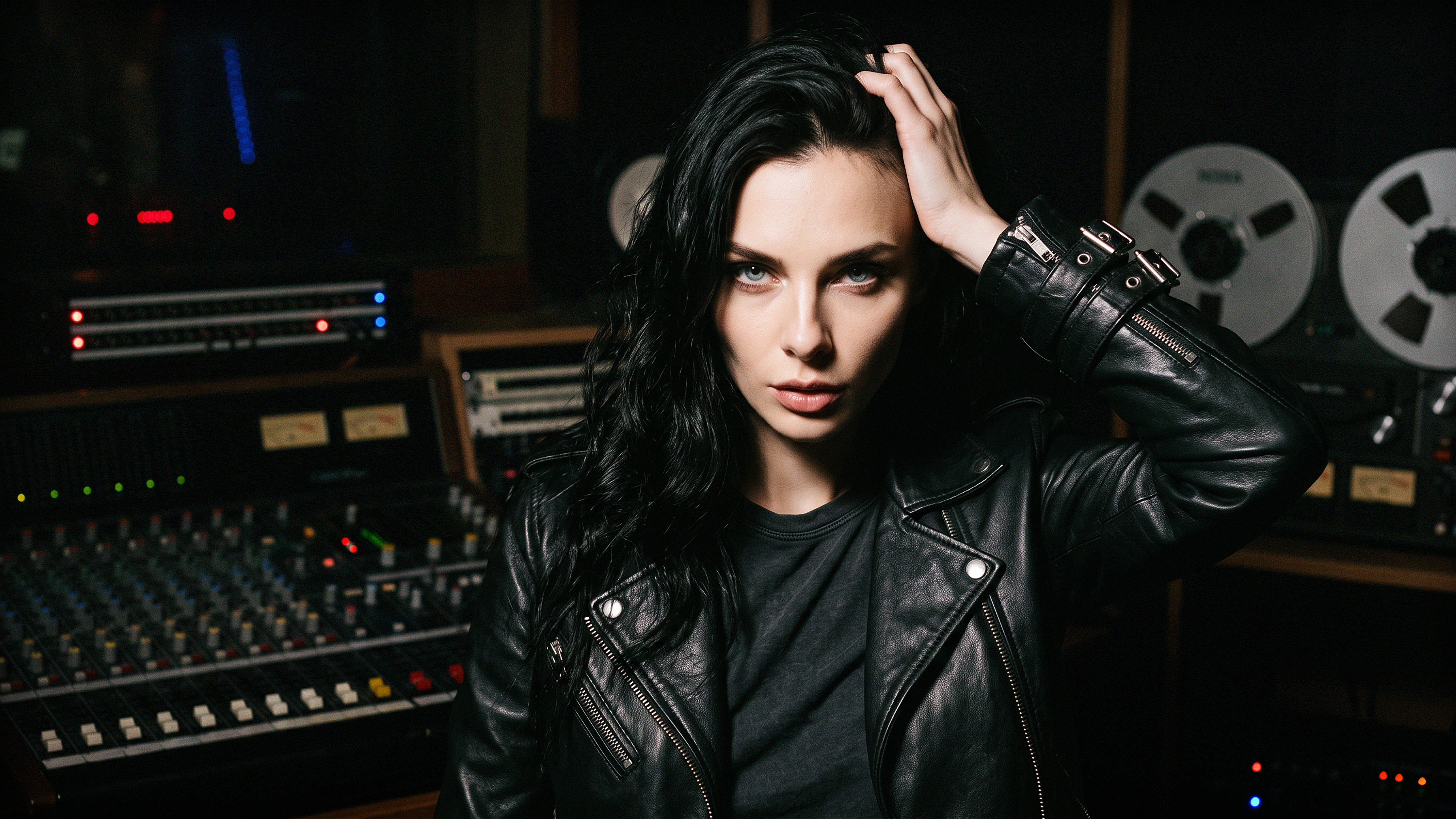

Kataya Bielová - Interview Photo - August 3, 2026
Few artists transform internal experience into art as comprehensively as Kataya Bielová. Across her book Inside My Mind and the companion album Lost, Utterly, she explores themes of motion, uncertainty, memory, identity, and resilience through poetry, essays, photography, and music. Drawing inspiration from her upbringing in Slovakia's forests and her lived experience of Pure O OCD, Bielová, 32, creates work that refuses easy resolution, choosing instead to examine what it means to continue moving forward despite unanswered questions.
Q: Your work moves fluidly between poetry, photography, essays, and music. How do you decide which ideas become songs rather than remaining on the page?
Bielová: For me, they're all translations of the same experience. Some ideas arrive as images and others as rhythm. A poem can hold a moment in a very concentrated form, while a song gives that same feeling space to breathe, repeat, and evolve. Whether or not one of these is expressed in one form or another is determined more by the necessities of the structure of the format itself rather than any selective process. They are all my same language either way and I find it enriching to speak in many tongues.
Q: Your lyrics often revisit recurring symbols such as fire, rivers, movement, and forests. Why do these images continue to appear in your work?
Bielová: I don't consciously choose them. They return because they reflect how I experience the world. Fire became a way of describing intensity and persistence. Rivers represent movement and transformation. Forests represent openness, curiosity, and the possibility of not needing immediate answers. These symbols appear because they remain useful ways of understanding experiences that are difficult to explain directly.
Q: What is the central idea behind Lost, Utterly?
Bielová: The album explores what it feels like to live with uncertainty and still continue forward. It's not a story about finding perfect peace or arriving at some final answer. It's about learning that motion itself has value. Many of the songs begin in states of fear or doubt, but they gradually shift toward persistence rather than resolution.
Q: Several songs such as "Momentum" and "Everlasting" seem connected by the concept of movement. Was that intentional?
Bielová: Very much so. Movement became the thread that tied everything together. I realised that waiting for perfect clarity was keeping me stuck. Action, creativity, and even small daily accomplishments create momentum. They don't erase uncertainty, but they stop it from becoming the centre of everything. That idea became one of the foundations of the album.
"The album explores what it feels like to live with uncertainty and still continue forward."
Q: How did growing up in Slovakia influence your artistic identity?
Bielová: The environment shaped me long before I understood that it was doing so. I grew up surrounded by a kind of quiet that encouraged observation. Those experiences gave me a lifelong appreciation the positive aspects of being inside your own mind. Even now, those places continue to influence how I approach music and writing.
Q: Musically, what genres and artists helped form your sound?
Bielová: My tastes evolved over time. I started with classical training through instruments like the flute, but eventually I became fascinated by trance music and metal. Both genres share a willingness to create emotional intensity, whether through repetition, atmosphere, or sheer force. The music I make today sits somewhere between structure and feeling, which I think reflects those influences quite naturally. As for artists, I've always been fond of Nightwish, particularly through their song The Owl and the Dove, which I admit to having annoyed my parents with from time to time. Nobody expected quiet and thoughtful Kataya to be so "artistically inclined", not that I ever wrote fan fiction or anything.
Q: The emotional honesty in your work is remarkable. Was it difficult to share such personal material publicly?
Bielová: Yes and no. The material is deeply personal, but once it becomes art it starts to belong to its own form. I wasn't interested in documenting my life for the sake of confession. I wanted to translate experiences into something broader and more universal. If someone recognises themselves in a lyric or a photograph, that's far more meaningful than simply revealing personal details.
Q: Was there a particular song on Lost, Utterly that challenged you the most during the writing process?
Bielová: "Exasperation" was probably one of the most difficult. It captures a sense of frustration with cycles that seem impossible to silence. Writing it required confronting thoughts I would rather have ignored. Likewise, the performance was also challenging in its own right due to its winding and spiralling nature. Exhaustion is the point at the end of exasperation. At the same time, finishing it reminded me that expression itself can be a form of movement.
Q: After completing Lost, Utterly and Inside My Mind, where do you see your creative work heading next?
Bielová: I want to continue exploring the connections between different artistic forms. Music will remain central, but I'm interested in expanding the relationship between writing, photography, visual storytelling, and performance. I particularly found the footage we filmed for the online videos to be powerful, I wish a full production had been possible but Ms. Molyneux was already overworked at the time. But ultimately, each medium reveals something the others cannot and I appreciate multilevel approaches.
Q: What do you hope listeners take away from your work moving forward?
Bielová: I hope they leave with a sense that uncertainty doesn't have to prevent living. We often imagine that confidence comes first and action follows. My experience has been the opposite. Sometimes you move first, and understanding arrives later. If the work communicates anything, I hope it's that continuation itself can be meaningful.
For Kataya Bielová, creativity is not about escaping complexity but engaging with it honestly. Through Lost, Utterly and her multidisciplinary work, she transforms uncertainty into movement and introspection into connection. Rather than offering easy conclusions, her art invites listeners and readers to keep moving, questioning, and creating. In a world increasingly focused on certainty, Bielová's work suggests that motion itself may be the most enduring form of resilience.